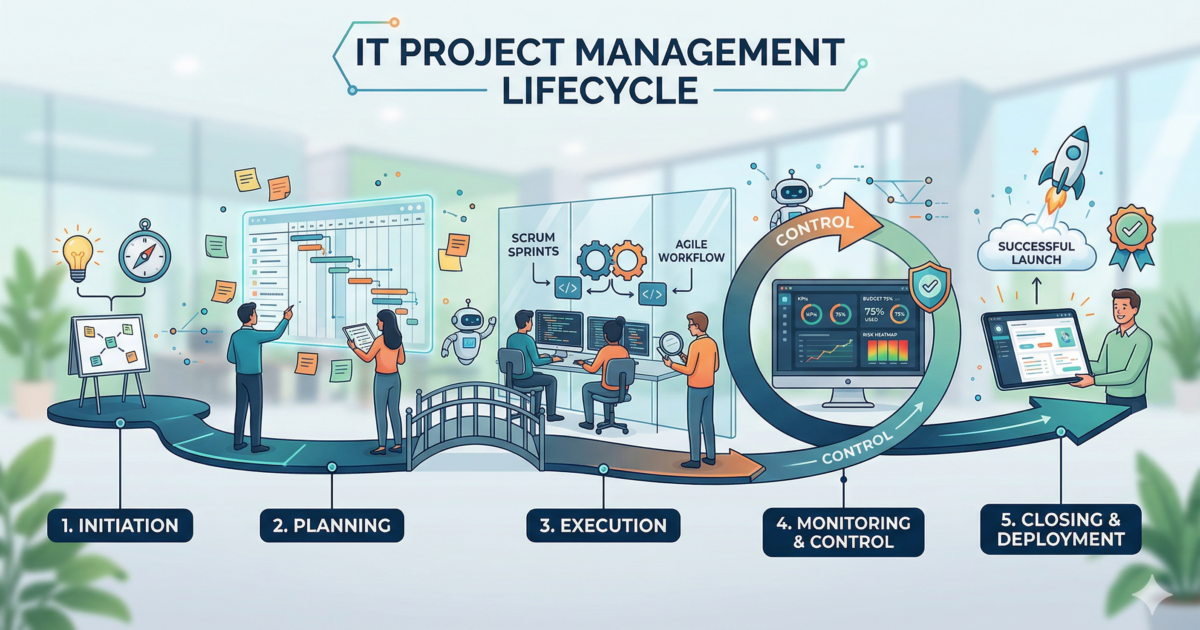
Agile project management has transformed how software teams deliver value. In an era where market demands shift overnight, the traditional “Waterfall” approach—where every detail is planned years in advance—often leads to obsolete products. By focusing on iterative progress, collaboration, and adaptability, Agile enables teams to respond to change rather than being held hostage by a rigid, outdated plan.
Core Agile Principles in Practice
1. Iterative Delivery and Value Realization
Rather than delivering a massive product all at once after months of silence, Agile breaks work into small, manageable Sprints—typically two-week cycles.
- The Benefit: Stakeholders see progress continuously.
- The ROI: This “Fail Fast, Learn Faster” mentality ensures that if a feature isn’t working, it’s identified in week two, not month six. This drastically reduces the cost of “pivot” and ensures the team is always working on the highest-priority tasks.
2. Cross-Functional Collaboration: Breaking the Silos
Agile removes the invisible walls between departments. In an Agile environment, developers, designers, testers, and business analysts work together daily.
- The Daily Stand-up: Short, 15-minute syncs ensure everyone is aligned and blockers are removed immediately.
- Reduced Friction: By involving stakeholders early and often, the “us vs. them” mentality disappears, accelerating the journey from idea to production.
3. Continuous Improvement (The Retrospective)
Agile is built on the belief that there is always a better way to work. At the end of every sprint, the team holds a Retrospective.
- Process Evolution: Instead of waiting for a “Post-Mortem” at the end of a project, the team optimizes their workflow every two weeks. This leads to a compound effect of efficiency over the life of the project.
Strategic Angles: Why Agile Wins in 2026
Managing Technical Debt
Agile allows teams to bake “maintenance” into the cycle. By addressing small technical issues in every sprint, you prevent the massive “system collapse” that often plagues rigid project structures.
Predictive Accuracy through Data
Through metrics like Velocity (how much work a team can realistically handle) and Burn-down Charts, Agile provides leadership with real-time data on when a project will actually be finished, based on performance rather than guesswork.
Getting Started with Agile
Transitioning to Agile requires a cultural shift as much as a process change. It requires moving from “Command and Control” to “Trust and Empower.”
At Skaldron, our project managers don’t just “manage” tasks; they act as Agile coaches. We guide your teams through this transformation with tailored support, helping you implement the right ceremonies and tools to ensure your technology investments deliver maximum value, faster.
Ready to Transform Your Business?
Let's discuss how Skaldron can help bring your vision to life with our expert IT development services.
Get Started